
Bringing a Labradoodle puppy home is exciting. But somewhere between browsing photos and falling in love with their little fluffy face, many people skip an important question: “What size will this dog actually be when it’s fully grown?”
Honestly, that answer is not something to overlook. Your dog’s adult size affects everything from living space and exercise needs to feeding costs and even everyday handling.
With that in mind, this guide covers all three Labradoodle sizes, including height, weight, space needs, and how Australian breeders like Oodle Pups predict adult size. By the end, you’ll know exactly which size fits your home and your life.
Australian Labradoodles: What the Size Categories Actually Mean
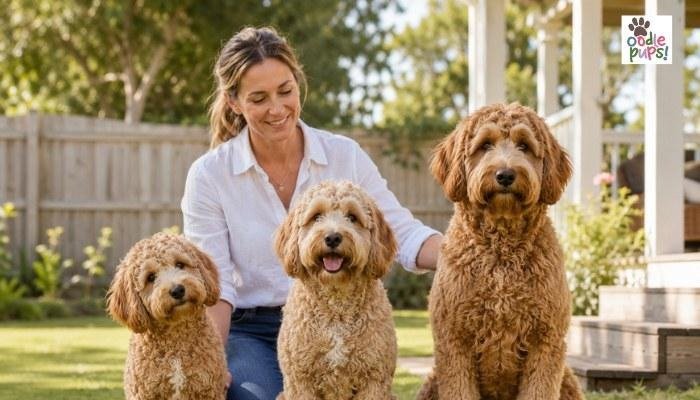
Australian Labradoodles come in three sizes, mini, medium and standard, each with distinct height, weight and lifestyle needs.
Originally, breeders crossed a Labrador Retriever with a Poodle to develop the Labradoodle. They then continued developing those early crosses through multiple generations to create more consistent traits and clearer size ranges.
That said, size categories aren’t locked in universally. Different breeders use slightly different ranges, so the breed types can vary depending on lineage and the Poodle used for the cross (toy, miniature, or standard).
However, one thing that always stays consistent is the general framework. A toy Poodle cross produces a much more compact dog than a standard Poodle cross. That’s exactly why you should ask the Poodle parent’s size when you’re planning to have labradoodle puppies.
Breaking Down Each Labradoodle Size: Mini, Medium and Standard

As mentioned before, the size you choose will influence nearly every part of your daily life with a Labradoodle. For instance, how much space it needs, how long your walks should be, and whether it’ll comfortably share your couch.
So, start here to see which one lines up with your life:
1. Miniature Labradoodles: What to Expect in a Smaller Package
Miniature Labradoodles typically weigh between 7 and 13 kilograms and stand around 35 to 42 centimetres at the shoulder (smaller than a standard Labrador cross). They also carry a non-shedding coat and a whole lot of energy in a compact frame.
If you’re in a flat or a smaller home, a mini is probably the first size you’ll land on (and that instinct isn’t wrong). These pups adapt well to apartment living, but they still need a solid daily walk to stay settled. Without enough activity, they can become restless and start chewing, barking, or causing trouble around the home.
They’re also genuinely easy to train, sociable with children, and soft in temperament. These traits make them a practical choice for families looking for a smaller companion pup.
2. Medium Size Labradoodles: The In-Between That Works for Most Families
Medium-sized Labradoodles stand between 43 and 52 centimetres from the ground and weigh around 13 to 20 kilograms. They usually sit in the large-medium range, which makes them versatile across different home setups.
Most families we hear from end up choosing this size, and it’s rarely a decision they regret. These dogs are athletic and graceful without being overwhelming. They also handle both indoor life and outdoor activity well, which is why they suit active families so naturally.
Beyond these, they’re sociable and gentle around family members, including younger children. Families can manage their energy levels without spending hours on exercise every day.
3. Standard Size Labradoodles: Room to Roam
Standard-size Labradoodles are the largest of the three. Physically, females generally sit a little lower than males, but both can reach up to 60 centimetres tall and weigh anywhere between 23 and 30 kilograms.
In particular, these dogs need more room to move, so they’re not a good fit for apartments. For that reason, we recommend this pup for a home with a secure yard and extra space to burn off energy between walks. These pups also benefit from longer, more varied daily exercise compared to the smaller ones.
Generally, standard Labradoodle puppies grow into calm, gentle companions once past the puppy stage. Although their size can look imposing, their temperament rarely is.
See also: Top Singapore Travel Attractions Nobody Should Miss
How Australian Breeders Predict Size in Labradoodle Puppies
Reputable breeders look at a combination of genetics, generation history, and health records to estimate how large a puppy will grow. As a result, families get a more realistic idea of what to expect as their puppy develops into an adult dog.
That said, a good breeder won’t just hand you a measurement scale. They’ll walk you through each of these:
- Parents’ Size: Smaller parents typically produce smaller offspring. In this case, the sire and dam’s build is the strongest single indicator breeders rely on.
- Generation Mix: Multigen Labradoodles are far more size-consistent than first-generation crosses. It means the further along the generational line, the more predictable the litter.
- Health History: Conditions like hip dysplasia can also affect how a younger pup develops. So a breeder tracking health across generations catches these patterns early.
- Nutrition: What a puppy eats during its first months is a key factor in how close it gets to its genetic size potential.
Many Brisbane breeders like Oodle Pups work exclusively with multi-generational Australian Labradoodles. They health test their dogs and provide size guidance for prospective buyers across all categories.
Note: Most pups fully mature between 12 and 18 months. Yet that timeline can vary with age and breed line, so don’t worry if your puppy takes a little longer to fill out.
Which Labradoodle Size Fits Your Life?
The right fit depends on your home, schedule, and how much energy you can genuinely match every single day. Yet most people pick a size based on looks alone and regret it later.
Here’s how each size lines up with different lifestyles:
- Mini Suits Smaller Spaces: Singles, couples, or families in apartments will find a miniature comfortable to manage. They’re energetic but compact, and a daily walk keeps them settled without needing a yard to run in.
- Medium Fits Active Families: A medium-sized Labradoodle slots into busy family life without much fuss. They’re athletic enough to join you on a long weekend walk, yet calm enough to wind down indoors afterwards.
- Standard Needs Room to Move: This breed needs a yard, longer exercise sessions, and an owner with time to match their energy. They’re a wonderful four-legged friend for the right household, but a poor fit for apartment living.
Suggestion: A chocolate or caramel coat might be what caught your eye first. But the size is what you’ll live with every day, so always consider that first. Plan around your lifestyle rather than just your preference for a colour.
Labradoodle Sizes at a Glance: Mini, Medium and Standard
Choosing between a mini, large-medium, and standard Labradoodle highly depends on how much their adult sizes can differ. Those differences affect the space, exercise, and daily care your dog will need.
This table puts all three side by side:
| Size | Height at Shoulder | Weight | Ideal Home | Exercise Need |
| Miniature | 35–42 cm | 7–13 kg | Apartment or small home | Moderate |
| Medium | 43–52 cm | 13–20 kg | House or larger apartment | Moderate to high |
| Standard | 53–60 cm | 23–30 kg | House with yard | High |
These numbers tell part of the story, but context fills in the rest.
A miniature Labradoodle in a busy household with children will need more play time than the table suggests. And a standard in a home with a large yard and an energetic family can do just as well as a smaller dog would.
The Size That Works for Your Home
Picking the right Labradoodle size isn’t complicated once you know what each one actually needs. Start by matching the dog’s build to your space, your schedule, and your energy level.
Here’s a quick recap before you decide:
- Mini: 7–13 kg, suits apartments and smaller homes
- Medium: 13–20 kg, versatile across most home setups
- Standard: 23–30 kg, needs a yard and longer daily exercise
If you’re still wondering which size is right for your home, Oodle Pups can help. We breed multi-generational Australian Labradoodles and guide prospective buyers through exactly this decision before a pup ever joins the family.