Introduction
The gaming industry has changed significantly as digital technology continues to advance. Modern games are no longer limited to simple characters, basic backgrounds, and straightforward controls. They now feature detailed environments, realistic lighting, creative visual effects, and interactive experiences that allow players to explore imaginative worlds. Behind these developments are powerful graphics processors, advanced software, artificial intelligence, and innovative design techniques.
One particularly interesting development is the connection between gaming and digital art. Game developers increasingly use artistic concepts to create characters, environments, objects, and visual stories. Every detail, from the color of a landscape to the design of a building, can influence how players experience a digital world.
The keyword https://halloweenartgallery.com/ can be considered within this wider relationship between digital creativity and online visual culture. Art-inspired websites and creative platforms reflect the growing importance of visual presentation across the internet. Although gaming and art galleries serve different purposes, both demonstrate how digital technology helps people discover, experience, and appreciate creative work.
The Evolution of Game Development Technology
The earliest video games were created with limited computing power. Developers had to work with basic graphics, small storage capacities, and simple programming systems. Characters and environments were often represented through a small number of pixels, but these early experiences introduced the foundations of interactive entertainment.
As processors became faster and memory capacity increased, developers gained more opportunities to experiment. Games began featuring detailed character models, larger environments, advanced animations, and complex sound effects. Graphics processing units made it possible to display visual information more efficiently, while improved storage systems allowed developers to include more content.
The introduction of online connectivity created another major change. Players could communicate with one another, explore shared environments, and access new content through the internet. Gaming gradually developed from an individual activity into a connected digital experience.
Today, game development combines several technical disciplines. Programmers, designers, artists, sound engineers, and testing specialists work together to build interactive products. Each team contributes to the final experience, making modern gaming a strong example of collaboration between technology and creativity.
See also: How Technology Is Enhancing Customer Experience
Digital Art and Visual Design in Video Games
Art plays a central role in creating memorable gaming experiences. A game’s visual identity helps establish its atmosphere, communicate its story, and distinguish it from other digital products.
Digital artists use specialized software to create character illustrations, environmental concepts, textures, and three-dimensional objects. These assets are then prepared for use within the game engine. A character may begin as a simple drawing before becoming a detailed digital model with movement, expressions, and interactive abilities.
Color selection is another important part of visual design. Bright colors may create a cheerful atmosphere, while darker palettes can communicate mystery or tension. Lighting and contrast help guide the player’s attention toward important objects and locations.
The relationship between artistic direction and technical performance requires careful planning. Highly detailed visual assets can improve presentation, but they also require processing power and memory. Developers must optimize their artwork so that it performs well across supported devices.
The growing interest in https://halloweenartgallery.com/ also provides a useful connection to the wider world of visual creativity. Online art spaces demonstrate how digital platforms can bring artwork and creative ideas to audiences through accessible visual presentation.
Graphics Engines and Realistic Environments
A game engine is a software framework that provides tools for building and running interactive experiences. It can handle graphics rendering, physics calculations, sound, animation, and other important functions.
Modern game engines allow developers to create detailed environments without building every technical system from the beginning. They provide reusable tools that help teams focus on designing characters, locations, and gameplay mechanics.
Graphics rendering is one of the engine’s most important responsibilities. It converts digital objects and environmental information into the images displayed on a screen. This process involves calculating lighting, shadows, textures, reflections, and camera perspectives.
Some modern engines support real-time ray tracing, a technique that simulates how light interacts with objects. It can create more natural reflections and lighting effects, although it requires considerable hardware resources.
Environmental details also contribute to realism. Moving leaves, flowing water, changing weather, and dynamic lighting can make a digital location feel more alive. Developers must balance these effects with performance requirements to ensure that the game remains responsive.
Artificial Intelligence and Intelligent Game Systems
Artificial intelligence has become an important tool in modern game development. It can help create responsive characters, improve environmental interactions, and support automated testing.
Non-player characters, commonly known as NPCs, are controlled by the game’s software rather than directly by users. Their behavior may include movement, communication, environmental reactions, and responses to specific player actions.
AI-based systems can make these interactions more flexible. For example, an NPC may respond differently depending on the player’s location or the situation occurring around it. This can help create environments that feel more dynamic.
Artificial intelligence can also support development teams by identifying technical problems. Automated testing systems can repeat actions, examine different situations, and help locate errors that may otherwise take considerable time to discover.
Another application is content personalization. Certain games can adjust selected features according to player preferences or progress. This may include tutorials, difficulty settings, or recommendations for additional activities.
However, artificial intelligence is not a replacement for artistic judgment. Human developers remain essential for designing meaningful characters, original stories, and enjoyable interactions.
The Role of 3D Modeling and Animation
Three-dimensional modeling allows artists to create digital objects with depth, shape, and realistic proportions. These models can represent characters, buildings, furniture, landscapes, vehicles, and other objects within a game.
The modeling process often begins with a basic structure. Artists gradually add details, refine surfaces, and prepare the object for use in a game engine. Textures provide information about color and surface appearance, while materials determine how an object reacts to lighting.
Animation gives movement to digital models. Character animation may include walking, running, jumping, facial expressions, and interactions with objects. These movements need to look natural and remain consistent with the character’s design.
Motion capture is another technology used by some development studios. It records human movement and uses that information to help create realistic digital animations. Artists may then refine the results to match the game’s visual style.
Together, modeling, texturing, and animation transform static artwork into interactive elements. This combination is essential for creating convincing digital worlds.
Virtual Reality and Augmented Reality
Virtual reality and augmented reality are introducing new possibilities for interactive entertainment. Both technologies combine digital content with different ways of experiencing the surrounding environment.
Virtual reality uses specialized equipment, usually including a headset, to place users inside a computer-generated world. Motion sensors track head movement, allowing the displayed environment to respond as the user looks around.
Augmented reality works differently. It adds digital objects or information to a view of the real world through a compatible device. This technology can support interactive learning, design applications, entertainment, and creative demonstrations.
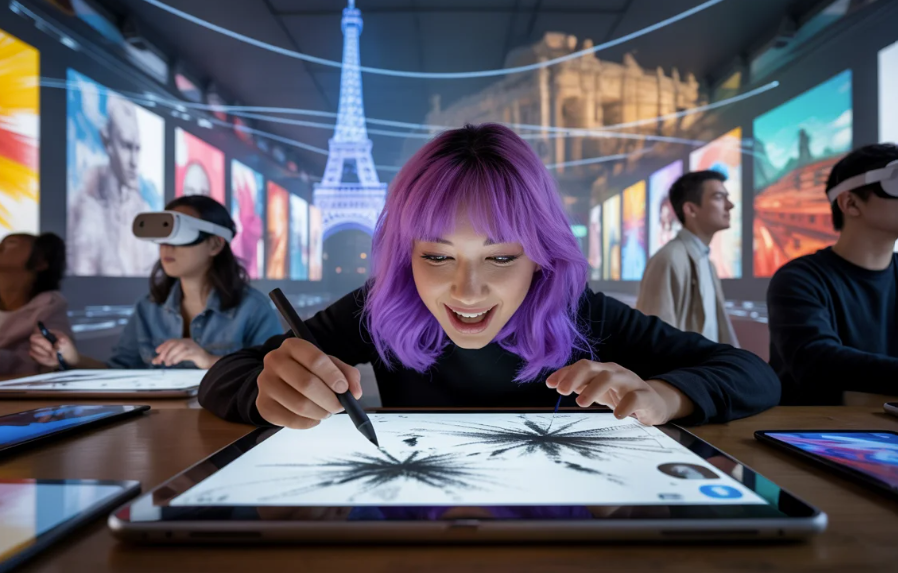
Art and visual design can benefit from both approaches. A virtual gallery, for example, could allow visitors to explore artwork inside a digital environment. Augmented reality could help users preview how a digital illustration or decorative object might appear in a physical space.
Game developers must consider visual comfort, movement tracking, display quality, and device performance when creating these experiences. Good design is necessary to make the technology enjoyable and accessible.
Mobile Gaming and Creative Applications
Smartphones have become powerful digital tools. Modern devices include advanced processors, capable graphics hardware, high-resolution displays, and improved storage systems. These features allow users to enjoy complex games and creative applications without needing a desktop computer.
Mobile technology has also made digital art more accessible. Artists can use tablets and smartphones to sketch ideas, edit images, organize creative projects, and share their work online.
For game developers, mobile optimization requires special attention. A game must operate within the device’s available memory, processing capacity, and battery limits. Developers may offer different graphics settings so that users can adjust performance according to their hardware.
Touchscreen controls also require thoughtful design. Buttons should be easy to understand and positioned where users can reach them comfortably. Text and interface elements must remain readable on different screen sizes.
These improvements have helped connect gaming, illustration, photography, and other creative activities through portable technology.
Online Platforms and Digital Creative Communities
The internet has made it easier for artists, designers, developers, and gaming enthusiasts to share their work. Online communities provide spaces where people can publish projects, exchange feedback, discover new ideas, and learn from others.
Digital galleries can display artwork through organized collections, images, and descriptive information. Gaming communities may use similar presentation methods to showcase character designs, fan illustrations, concept art, and creative modifications.
The supplied keyword https://halloweenartgallery.com/ fits naturally into a discussion of online visual culture. Websites built around creative themes demonstrate the role that digital platforms can play in presenting artwork and connecting audiences with visual content. This is a broader connection to digital creativity rather than a claim that the website provides gaming services.
For any online creative platform, clear navigation is important. Visitors should be able to find content easily, view images comfortably, and understand how different sections are organized. Responsive layouts also help ensure that websites work across desktop computers, tablets, and smartphones.
A positive community environment encourages creativity. Respectful feedback and clear publishing guidelines can help contributors share their ideas while maintaining content quality.
Cybersecurity and Protection of Digital Content
As creative work moves online, protecting digital information becomes increasingly important. Artists may spend many hours creating illustrations, models, and designs, so unauthorized copying or misuse can be a serious concern.
Digital platforms can improve security through account verification, access controls, secure connections, and responsible data management. Users should also protect their accounts with strong passwords and avoid downloading unfamiliar files.
Copyright awareness is another important subject. Artists should understand how their work may be shared, displayed, or reused. Platforms should provide clear information about content ownership and permissions.
Game developers also need to protect their software and user accounts. Security updates, reliable authentication systems, and safe download sources help create a more trustworthy environment.
Responsible digital practices support both creators and audiences by encouraging respect for original work and personal information.
The Future of Gaming and Digital Creativity
The future of gaming will likely bring further developments in artificial intelligence, graphics processing, cloud computing, and immersive technology. These innovations may allow developers to create more detailed environments and responsive digital characters.
AI-assisted creative tools could help artists explore new design ideas, generate early concepts, or complete repetitive tasks. However, human creativity will remain essential for making original artistic decisions and maintaining a consistent visual identity.
Cloud technology may also improve access to demanding applications by allowing some processing tasks to take place on remote systems. At the same time, faster internet infrastructure could support better collaboration between creative teams working in different locations.
Virtual galleries, interactive exhibitions, and digital art communities may become more sophisticated as display technology improves. These developments show that gaming technology and digital creativity will continue influencing one another.
The most successful innovations will be those that make creative tools easier to use while maintaining quality, accessibility, and security.
Conclusion
Game technology has developed into a combination of programming, graphics processing, artificial intelligence, animation, networking, and creative design. These elements work together to create interactive environments that offer far more than basic entertainment.
Digital art is an important part of this progress. Character illustrations, environmental design, three-dimensional models, and visual effects help transform technical systems into memorable experiences. Online platforms also provide opportunities for creators to share their work and connect with wider audiences.
The keyword https://halloweenartgallery.com/ relates to the broader conversation about online visual culture and the role of websites in presenting creative content. While gaming and art platforms have different purposes, both demonstrate how technology can make digital creativity more accessible.
As the industry continues to advance, the connection between artistic imagination and technical innovation will remain one of its most valuable strengths. Future developments will create new ways for people to design, explore, share, and experience digital worlds.