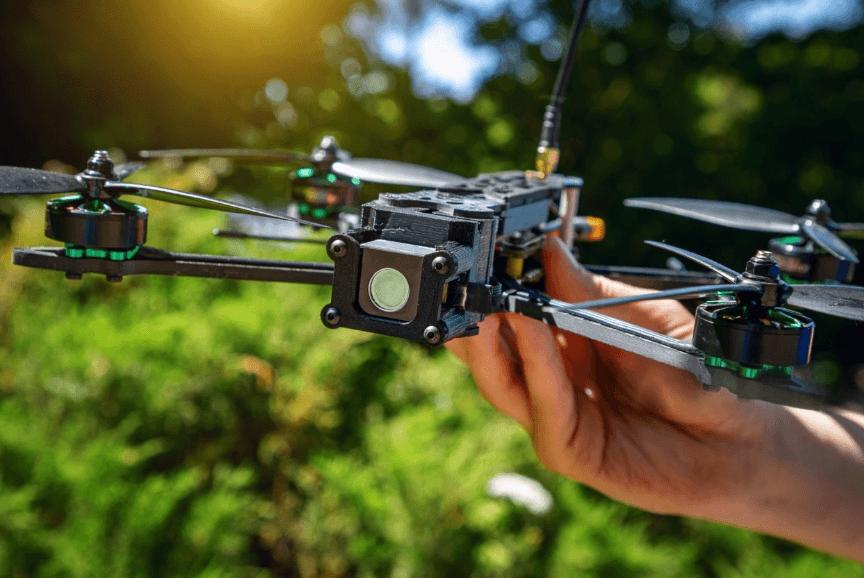
Choosing the right battery is one of the most important decisions when building or upgrading an FPV drone. The battery does much more than determine how long a drone can stay in the air. Its voltage, capacity, discharge capability, weight, and physical size all influence acceleration, throttle response, efficiency, and overall flight performance.
A battery that works well for a lightweight racing quad may not be suitable for a heavy freestyle drone or long-range build. Even two drones using the same frame size can require completely different batteries depending on their motors, propellers, electronics, and flying style.
Understanding the key battery specifications can help pilots avoid compatibility problems and build a more balanced FPV power system.
What Makes an FPV Battery Different?
Most FPV drones use lithium polymer batteries, commonly known as LiPo batteries. LiPo packs are popular because they can deliver high amounts of current while remaining relatively lightweight.
An fpv battery is typically described using several specifications:
- Cell count, such as 4S or 6S
- Capacity, measured in mAh
- Discharge rating, commonly expressed as C
- Voltage
- Physical dimensions
- Weight
- Connector type
These specifications work together. Increasing battery capacity can increase flight time, but it also adds weight. Increasing voltage can provide more power, but the motors and ESC need to be designed for that voltage.
The best battery is therefore not necessarily the one with the largest capacity or highest discharge rating. It is the one that matches the entire drone.
Understanding Battery Cell Count
One of the first specifications to check is cell count.
You will frequently see FPV batteries described as 2S, 3S, 4S, 6S, and so on. The “S” indicates how many individual cells are connected in series.
A single LiPo cell has a nominal voltage of approximately 3.7V. A 4S battery therefore has a nominal voltage of around 14.8V, while a 6S battery has a nominal voltage of around 22.2V.
The actual voltage changes depending on the battery’s charge level.
Battery voltage needs to match the requirements of the motors, ESC, flight controller, and other electronics. Using a battery with a higher voltage than the system is designed to handle can damage components.
This is why you should always check the manufacturer’s recommended battery range before connecting a new pack.
4S vs. 6S: Which Is Better?
The choice between 4S and 6S is common among FPV pilots, particularly for 5-inch drones.
A 4S setup operates at a lower voltage and can provide a familiar balance of power, weight, and availability. It remains popular for many FPV applications.
6S systems use higher voltage and can provide strong performance while allowing the motor system to operate at a lower KV compared with an equivalent 4S setup.
However, neither option is universally better.
The motor KV must be matched to the battery voltage. A motor designed for a 6S setup may be unsuitable for a 4S configuration without considering the resulting RPM and performance differences.
When deciding between 4S and 6S, look at the complete motor, propeller, and ESC combination rather than choosing based on battery voltage alone.
Battery Capacity and Flight Time
Battery capacity is measured in milliamp-hours, or mAh.
In general, a higher-capacity battery contains more stored energy and can potentially provide longer flight time. However, capacity also increases battery weight.
This creates an important trade-off.
Suppose you replace a 1,100mAh battery with a much larger pack. The additional energy may increase flight time, but the heavier drone now requires more thrust just to remain airborne. The motors consequently consume more energy.
At some point, adding battery capacity can produce diminishing returns.
For racing and aggressive freestyle, pilots often prefer lighter batteries because acceleration and maneuverability are more important than maximum flight time. Long-range pilots may accept additional weight in exchange for greater energy capacity.
The ideal capacity depends on the complete aircraft.
What Does the C Rating Mean?
The C rating is intended to indicate how quickly a battery can safely deliver current.
For example, a battery rated at 1000mAh and 100C has a theoretical continuous current capability of:
1Ah × 100C = 100A
However, real-world battery performance can differ from the advertised rating, and manufacturers may use different testing methods.
The important thing is to ensure the battery can provide enough current for the expected demands of the drone.
A high-performance freestyle or racing quad can draw substantial current during aggressive throttle use. If the battery cannot provide sufficient current, voltage sag can become noticeable and the drone may feel less responsive.
On the other hand, choosing an extremely high C rating is not always necessary for a low-power or long-range build.
Voltage Sag and FPV Performance
Voltage sag occurs when battery voltage temporarily drops under load.
Some voltage sag is normal, particularly when the motors demand large amounts of current. However, excessive sag can affect performance.
A drone experiencing significant voltage sag may feel weaker during full-throttle acceleration. The battery may also become hotter than expected.
Battery condition, internal resistance, temperature, capacity, and current demand all influence voltage sag.
This is one reason experienced FPV pilots often pay attention to battery quality rather than relying only on capacity and advertised C rating.
Two batteries with identical specifications on paper can perform differently in actual flight.
Battery Weight Matters
Weight is one of the most important factors when selecting an FPV battery.
A heavier battery increases the all-up weight of the drone. The motors must then produce additional thrust to maintain the same flight condition.
For a racing drone, this can negatively affect acceleration and cornering. For freestyle, it can change the drone’s response during flips and other maneuvers.
For long-range applications, however, carrying a larger battery can make sense because the additional energy may outweigh the disadvantages of increased mass.
The key is to find a practical balance between energy capacity and aircraft weight.
Choose the Battery Based on Your Drone
Different FPV platforms have different battery requirements.
3-Inch and Smaller Drones
Small drones generally require compact, lightweight batteries. Excessive battery weight can dramatically affect their flight characteristics.
5-Inch Racing Drones
Racing drones typically prioritize low weight and strong current delivery. A relatively compact battery can provide the high-power bursts needed for rapid acceleration.
5-Inch Freestyle Drones
Freestyle builds often need a balance between punch-out power and practical flight time. Battery selection should take the motor KV, propeller, and total drone weight into account.
7-Inch Long-Range Drones
Long-range drones generally place more emphasis on energy capacity and efficiency. Larger batteries can provide useful additional flight time, provided the motors and frame can handle the increased weight.
Cinewhoops
Cinewhoops often carry cameras or other payloads, making the power-to-weight ratio particularly important. Battery selection should account for the additional equipment carried by the drone.
See also: How Technology Is Enhancing Customer Experience
Match the Battery to the Motors
The relationship between battery and motor is critical.
Motor KV determines how quickly a motor tends to spin per volt under no-load conditions. Increasing battery voltage increases the motor’s potential RPM.
For example, using the same motor with a 6S battery instead of a 4S battery can significantly change the power system’s behavior.
This means that battery selection should always be considered together with motor KV and propeller specifications.
A good starting point is to check the motor manufacturer’s recommended battery voltage and propeller combinations. From there, select a battery capacity that fits the drone’s weight and intended flight time.
Check the ESC and Other Electronics
The battery does not connect only to the motors. It supplies power to the entire electrical system.
Before installing a battery, verify that the ESC is rated for the intended voltage. The flight controller and other electronics also need appropriate power.
For example, a 6S battery can reach a significantly higher fully charged voltage than its nominal rating. The electronics must be capable of safely handling the maximum voltage they may receive.
It is also important to use the correct connector and ensure the battery physically fits the frame and battery strap.
Small details such as connector type, cable length, and battery dimensions can make a significant difference during assembly.
How to Choose an FPV Battery
A practical selection process can be broken down into a few steps.
First, identify the battery voltage recommended for your motors and ESC.
Next, determine how much capacity you need based on your flying style. If you prioritize racing performance, keeping weight low may be more important than maximizing capacity.
Then consider current requirements. The battery should be capable of delivering the current demanded by the motors without excessive voltage sag.
Finally, check the physical dimensions, weight, connector, and mounting arrangement.
When comparing an FPV battery, looking at all of these specifications together is much more useful than simply comparing mAh numbers.
MEPSKING is also an example of an FPV-focused retailer where pilots can compare batteries alongside motors, ESCs, flight controllers, and other drone components. Considering these parts together can make it easier to build a compatible power system.
Common FPV Battery Mistakes
One common mistake is choosing the largest battery available because it appears to offer longer flight time. The additional weight can actually reduce efficiency and make the drone less responsive.
Another mistake is ignoring the motor’s KV rating. A battery with the wrong voltage can cause the motor system to operate outside its intended range.
Some pilots also rely too heavily on the advertised C rating. Real-world battery performance depends on more than the printed number.
Finally, using a damaged, swollen, or excessively worn LiPo battery is a serious safety concern. FPV batteries should be inspected regularly, stored appropriately, and charged using a suitable balance charger and safe charging practices.
Final Thoughts
The right FPV battery is the result of balancing voltage, capacity, current capability, weight, and physical compatibility.
Start with the requirements of your motors and ESC, then choose the voltage. From there, select a capacity that provides the flight time you need without adding unnecessary weight. Consider current demand, voltage sag, connector type, and battery dimensions before completing the purchase.
For racing, lightweight high-current packs may be the priority. Freestyle pilots usually need a balance between punch and flight time, while long-range pilots may accept additional weight to gain more energy capacity.
Once you understand how battery voltage, capacity, weight, and current delivery affect your drone, choosing the right pack becomes much easier. More importantly, a properly matched battery can make the entire FPV system feel more responsive, efficient, and predictable in the air.