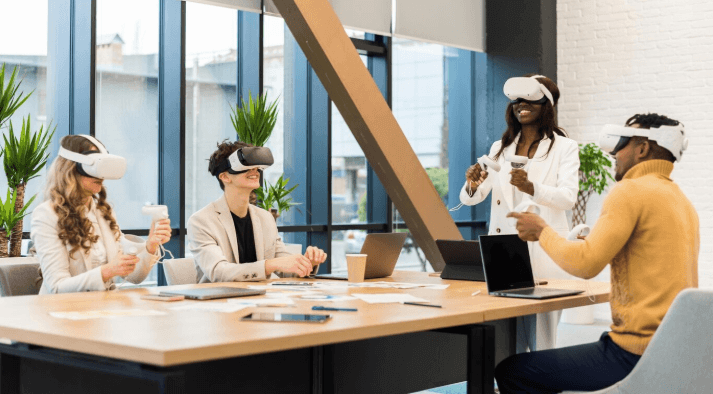
Technology is integrating into daily workflows, weaving automation, collaboration tools, and real-time data into operations. Teams monitor throughput via dashboards, anticipate bottlenecks, and run experiments within governance-guided ecosystems. Adaptability and analytical literacy rise as core competencies, while remote onboarding accelerates alignment and autonomous problem-solving. Hybrid leadership and interoperable tools enable scalable, secure collaboration. The result is a resilient, freedom-driven work culture that can adapt to rapid change, leaving organizations poised for what comes next.
How Technology Alters Daily Workflows
Technology reshapes daily workflows by weaving automation, collaboration tools, and data visibility into the fabric of work processes. In this landscape, teams monitor throughput, minimize friction, and anticipate bottlenecks with real-time dashboards.
Yet automation fatigue surfaces when tools multiply without coherence.
Remote onboarding accelerates access and alignment, translating complex workflows into adaptable routines that empower autonomous, cross-functional collaboration and sustained organizational freedom.
Skills That Thrive in a Tech-Driven Workplace
As teams increasingly leverage automated processes, collaborative platforms, and real-time analytics, the set of valued skills shifts toward adaptability, analytical literacy, and proactive governance of digital tools.
In this tech-driven landscape, individuals excel through remote onboarding efficiency, autonomous problem-solving, and continuous learning.
Teams forecast risk, measure impact with data, and cultivate experimentation, empowering workers to shape outcomes within flexible, transparent, and security-conscious ecosystems.
Choosing the Right Tools for Your Team
Choosing the right tools for a team requires a disciplined assessment of needs, capabilities, and governance, guided by measurable outcomes and scalable workflows. Tools should illuminate collaboration, not complicate it.
Choosing tools means evaluating interoperability and data flows, aligning with Team governance and Automation ethics.
Vendor selection must emphasize transparency, security, and long-term adaptability for freedom-driven, future-ready work environments.
Preparing for a Resilient, Collaborative Future
The strategy emphasizes automation ethics and hybrid leadership as core, data-informed guides, enabling distributed teams to coordinate safely, innovate responsibly, and scale resiliently while maintaining personal autonomy and shared purpose.
Frequently Asked Questions
How Will AI Impact Job Security Across Industries?
In a fading dawn, AI displacement looms yet fosters resilience; job polarization persists, but lifelong learning models and productivity metrics guide adaptation. Automation ethics, digital inclusivity, and broad-skilling temper uncertainty, shaping future security through informed, freedom-friendly workforce evolution.
What Ethical Considerations Accompany Automation in the Workforce?
Automation introduces privacy ethics concerns and bias mitigation as central, guiding frameworks. A visionary, data-driven stance anticipates governance that protects individual autonomy while enabling innovation, balancing transparency, accountability, and freedom to choose paths amid evolving, ethically conscious work ecosystems.
How Can Teams Measure Productivity With New Tech?
Teams measure productivity with new tech via standardized measurement protocols and data transparency, addressing objections about surveillance by showing trusted benchmarks. It remains visionary, data-driven, anticipatory, and freedom-oriented, guiding autonomous teams toward continuous improvement and purposeful, measurable outcomes.
See also: reclamatomplo
What Training Models Best Support Lifelong Learning?
Lifelong learning thrives under adaptive training models that scale with individual needs, enabling autonomous growth. Visionary, data-driven systems prioritize continuous feedback, modular curricula, and micro-credentials, empowering learners to navigate uncertainty, embrace experimentation, and pursue freedom through structured, anticipatory upskilling.
How Do We Ensure Inclusive Access to Digital Tools?
Inclusive access shapes policy and design, advancing digital equity through affordable devices, broadband, and accessible platforms. The approach favors immersive training, open collaboration, data-driven metrics, and anticipatory innovation, empowering individuals seeking freedom to participate broadly in digital ecosystems.
Conclusion
Technology reshapes routine and rhythm in tandem with data streams. Automation accelerates precision, while human judgment curates meaning from insights. Teams flourish when dashboards surface bottlenecks alongside creative ideation, yet governance protects against fatigue and risk. Skills migrate toward analytical literacy and adaptive problem-solving, not mere tool familiarity. The future of work binds freedom with security, autonomy with collaboration, and resilience with interoperability. In this evolving landscape, progress is plotted in dashboards, decisions, and disciplined experimentation.